
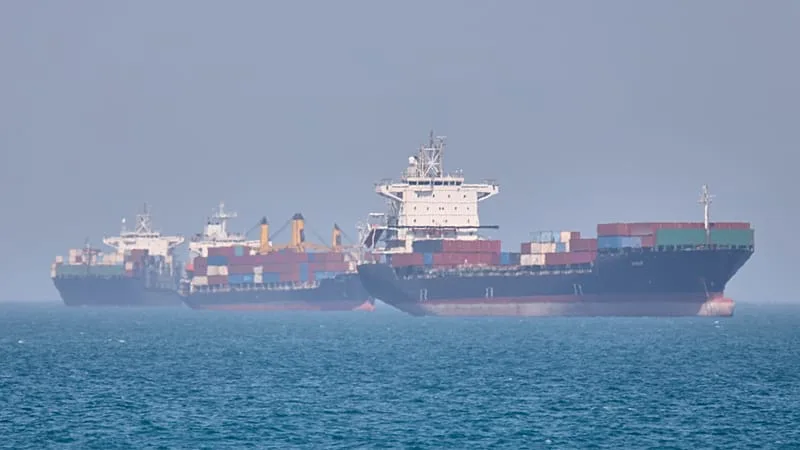
Global trade’s next top priority: Bypassing the Hormuz chokepoint
As tensions in the Strait of Hormuz escalate, global shipping companies are scrambling to keep trade moving by redrawing global trade maps through costly workarounds.
For many industries that have been built on predictability and freedom of navigation, the uncertainty hanging over supply chains has quickly become the world’s most disruptive maritime risk.
The current crisis presents less of a temporary shock and more of a unique structural problem for container shipping firms like Maersk, Mediterranean Shipping Company and Hapag-Lloyd.
The cost of rerouting cargo
Unlike disruptions caused by piracy in the Red Sea, where vessels could reroute via the Cape of Good Hope, Hormuz offers no viable maritime alternatives. Any cargo heading to Gulf economies must still pass through the narrow waterway. As a result, carriers are forced to adapt to a volatile situation by putting in place operational workarounds.
“This is a natural and expected development, and it has been happening since day one of the disruption,” said Maha Raad, shipping expert and partner at Strategy& Middle East, part of PricewaterhouseCoopers.
“But it is more than a simple rerouting. It reflects a deeper redesign of maritime networks around security, reliability, and effective corridor control.”
Firms are also increasingly becoming operationally flexible.
“Companies are now placing far greater emphasis on real-time intelligence, dynamic risk assessments and closer coordination with naval and regional maritime security frameworks,” said Christopher Long, head of intelligence and compliance at the Neptune P2P Group.
Recent Comments